6th National Conference of Bangladesh Indigenous Peoples Forum Held, Calls for Unity to Establish Indigenous Peoples’ Rights

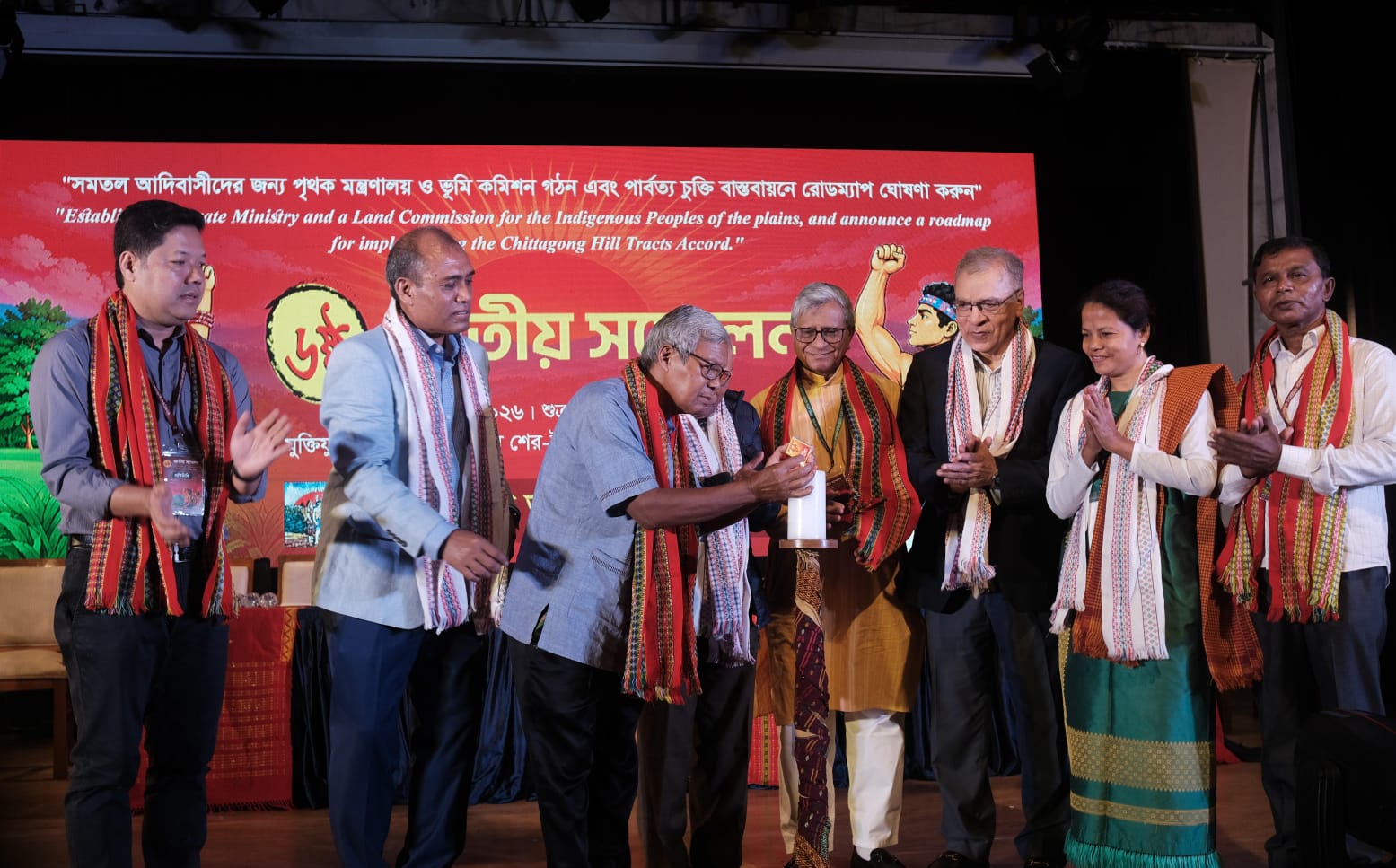
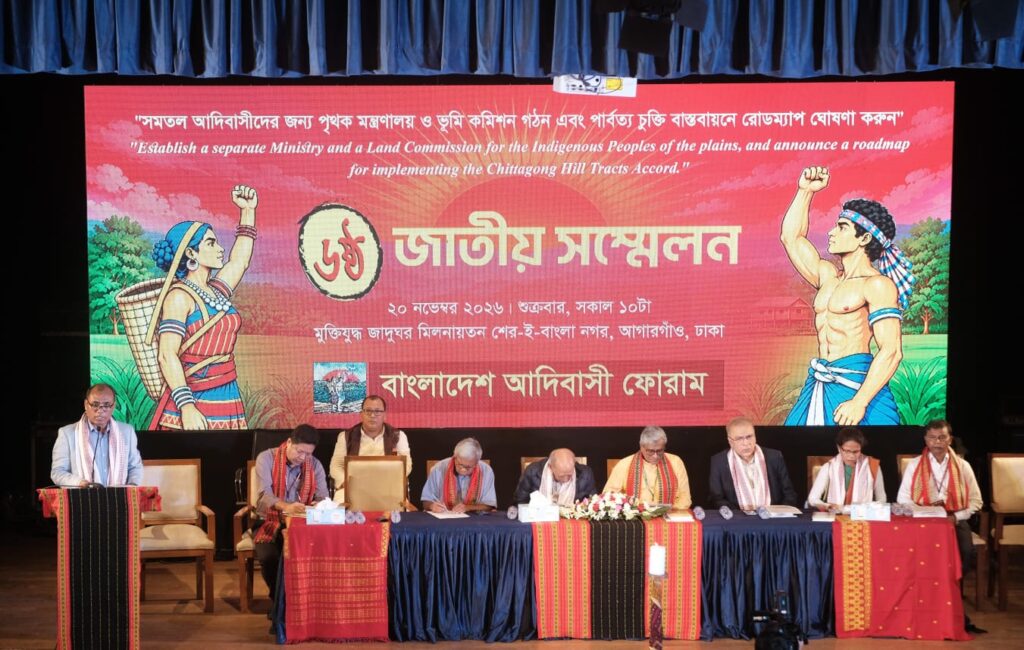
IPNews BD | Dhaka, 20 November 2026: The 6th National Conference of the Bangladesh Indigenous Peoples Forum(BIPF) was held today, 20 November 2026, at the auditorium of the Liberation War Museum in Dhaka under the slogan: “Establish a Separate Ministry and Land Commission for Indigenous Peoples in the Plains and Announce a Roadmap for the Implementation of the CHT Accord.”
The programme was moderated by Ujjal Azim, Secretary for Sports and Education, and Falguni Tripura, Secretary for Women’s Affairs, of the Bangladesh Indigenous Peoples Forum. It was chaired by Ajay A. Mree, Vice-President of the BIPF.
Among the distinguished guests and speakers were Senior Advocate Subrata Chowdhury of the Supreme Court of Bangladesh; human rights activist and Executive Director of ALRD, Shamsul Huda; Dr. Iftekharuzzaman, Executive Director of Transparency International Bangladesh (TIB); Kazi Sajjad Zahir Chandan, President of the Communist Party of Bangladesh; Rajekuzzaman Ratan, Joint General Secretary of the Socialist Party of Bangladesh; Pallab Chakma, Executive Member of the Bangladesh Indigenous Peoples Forum and Secretary-General of the Asia Indigenous Peoples Pact (AIPP); Filimon Baskey, President of the Sahebganj-Bagda Farm Land Recovery Struggle Committee and Indigenous leader; and Flora Babli Talang, President of the Moulvibazar District Branch of the Bangladesh Indigenous Peoples Forum, among others.

The welcome address was delivered by Sanjib Drong, General Secretary of the Bangladesh Indigenous Peoples Forum.
The conference was inaugurated with the national anthem and the lighting of candles. Following the inauguration, a condolence resolution was presented in honour of all the brave martyrs who sacrificed their lives in the struggle for the establishment of Indigenous Peoples’ rights. The resolution was read out by Dr. Gajendranath Mahato, Joint General Secretary of the Bangladesh Indigenous Peoples Forum.
Welcome Address by Sanjib Drong, he said that the Bangladesh Indigenous Peoples Forum had been struggling for the rights of Indigenous Peoples for the past 25 years. Many progressive Bengali allies had also joined this struggle.
He noted that although there had been no significant achievements over this long period, a deep bond had developed between Indigenous Peoples in the Chittagong Hill Tracts and those in the plains. Progressive individuals, human rights activists and NGO workers across the country had joined their movement, while Indigenous Peoples’ rights had also been raised at the international level. Furthermore, the rights of Indigenous Peoples had been mentioned in the election manifestos of national political parties. He stressed that these achievements should be viewed positively.
Citing anti-apartheid leader Nelson Mandela as an example, he urged everyone not to lose hope and emphasised that much more work remained to be done. He called upon Indigenous youth to take responsibility for advancing the movement for their people’s rights. He further expressed the desire to dream anew of a new Bangladesh, where Bengali and Indigenous Peoples would work hand in hand and shoulder to shoulder to build a humane and welfare-oriented state.
Pallab Chakma said that the Bangladesh Indigenous Peoples Forum had been established to strengthen the movement for the rights of Indigenous Peoples in both the hills and the plains and had continued this struggle for 25 years. He noted that several Asian countries had recognised the special rights of Indigenous Peoples. He also expressed his desire to view the government’s declared concept of a ‘Rainbow Nation’ positively.
Identifying the Chittagong Hill Tracts issue as a political problem, he called for the announcement of a roadmap for the implementation of the Chittagong Hill Tracts Accord. He also emphasised the need to end military rule, establish a democratic environment and maintain continuous dialogue with the government to fulfil its national and international commitments.
Kazi Sajjad Zahir Chandan said that Indigenous Peoples had made significant contributions to various struggles in the region, including the Santal Rebellion and the Tebhaga Movement.
However, Indigenous Peoples in both the hills and the plains continued to face persecution, oppression and discrimination. He stated that there was no alternative to movements and collective struggles for securing rights and assured that left-wing political parties would always stand beside Indigenous Peoples in this struggle.
Dr. Iftekharuzzaman said that the violation of Indigenous Peoples’ rights, land grabbing and the militarisation of the political problem in the Chittagong Hill Tracts were rooted in the abuse of state, bureaucratic and military power. He emphasised that establishing lasting peace in the Chittagong Hill Tracts required a political solution rather than militarisation.
He further observed that although Indigenous Peoples had contributed to all the country’s positive achievements, they continued to be deprived of the benefits of those achievements. He stressed that ensuring everyone’s rights would remain impossible without changing this mindset.
Rajekuzzaman Ratan said that although Indigenous Peoples had been campaigning for the same demands for 25 years, the state continued to ignore them.
He called for strengthening the movement by combining the enthusiasm of the younger generation with the experience of senior leaders. He also urged everyone to continue the struggle for establishing a democratic and egalitarian society beyond divisions based on religion and ethnicity.
Shamsul Huda said that Indigenous Peoples played a vital role in conserving the world’s forests, land and biodiversity. Therefore, the movement to protect Indigenous Peoples’ rights and existence was a collective struggle for everyone. He called for constitutional recognition of Indigenous Peoples and urged the Constitution Reform Commission to give serious consideration to their voices and demands.
Advocate Subrata Chowdhury said that the inclusive state envisioned by Manabendra Narayan Larma had yet to be established. He observed that political parties spoke about Indigenous Peoples’ rights before coming to power but failed to implement their commitments after assuming office.
He further stated that forming various committees opposed to the Chittagong Hill Tracts Accord without implementing the Accord was a subversive initiative. He emphasised the full implementation of the Accord and constitutional recognition of Indigenous Peoples.
Filimon Baskey said that human rights violations against Indigenous Peoples continued to occur in different parts of the country, including Gaibandha, Dinajpur and Rajshahi. However, these incidents were not receiving fair and proper justice. He called upon all progressive people across the country to come forward in support of the struggle for Indigenous Peoples’ rights.
Flora Babli Talang said that renewed efforts were necessary to advance the movement for Indigenous Peoples’ rights. In particular, she called upon leaders of Indigenous Peoples’ forums at the regional level to work with renewed enthusiasm.
She stressed the need to strengthen relationships with human rights and progressive organisations. She also emphasised combining the experience of senior leaders with the enthusiasm of younger generations to take the movement forward.
Written Statement of President Jyotirindra Bodhipriya Larma
A written statement by Jyotirindra Bodhipriya Larma, President of the Bangladesh Indigenous Peoples Forum, was read out by Hiran Mitra Chakma, Information and Publicity Secretary of the organisation.
In the statement, he said that Indigenous Peoples in different parts of Bangladesh continued to face land grabbing, eviction, forest-related cases, violence and various forms of discrimination. Although 29 years had passed since the signing of the Chittagong Hill Tracts Accord, the state had yet to implement it. Instead, efforts to undermine the rights of the Jumma people continued unabated.
He further stated that Indigenous women continued to face various forms of oppression and violence, while Indigenous youth were becoming increasingly frustrated and directionless due to an uncertain future. He observed that Indigenous Peoples had become strangers in their own homeland, deprived of their rights and left without protection. To confront this situation, he called for unity among Indigenous Peoples and urged them to advance the movement for their rights under progressive leadership.
Drawing inspiration from the struggles of Indigenous leaders of the past, he called upon the younger generation to come forward and take part in this struggle. Finally, he wished the 6th National Conference of the Bangladesh Indigenous Peoples Forum every success and expressed his hope that the organisation would become stronger.
In closing remarks of Ajay A. Mree extended greetings to everyone on behalf of the Bangladesh Indigenous Peoples Forum and urged them not to lose hope. He said that progressive and humanitarian people across the country stood alongside them in this struggle. The Bangladesh Indigenous Peoples Forum had been established to advance the movement for the rights of Indigenous Peoples, and Indigenous youth leadership must be prepared to carry this struggle forward.
He also noted that Indigenous Peoples had made significant contributions at every historic turning point in the country’s achievements, yet their rights had consistently been overlooked. Thanking all participants for attending the conference, he formally concluded the discussion session.
The 6th National Conference of the Bangladesh Indigenous Peoples Forum put forward the following ten demands:
1. Ensure constitutional recognition of Indigenous Peoples, including their right to self-determination.
2. Ensure the political, social, cultural, economic and land rights of Indigenous Peoples.
3. Ensure justice for all human rights violations committed against Indigenous women and guarantee the rights and security of all Indigenous women.
4. Ensure the proper and full implementation of the Chittagong Hill Tracts Accord. Announce a time-bound roadmap for its implementation and immediately operationalise the Land Commission Act.
5. Establish a separate ministry and a land commission for Indigenous Peoples in the plains.
6. Do not undertake or implement any projects, including eco-parks, social forestry, tourism or Economic Processing Zones (EPZs), on Indigenous lands without their Free, Prior and Informed Consent (FPIC).
7. Stop all forms of oppression and persecution against Indigenous Peoples and immediately withdraw all false cases filed against them.
8. Ratify the United Nations Declaration on the Rights of Indigenous Peoples (UNDRIP), adopted by the UN General Assembly in 2007, and ILO Convention No. 169, and implement ILO Convention No. 107.
9. Reserve designated seats for Indigenous Peoples in the National Parliament.
10. Maintain Indigenous Peoples’ employment quotas in all categories of government jobs, including first- and second-class positions, and ensure the proper implementation of the 5 per cent Indigenous quota in admission to all educational institutions.
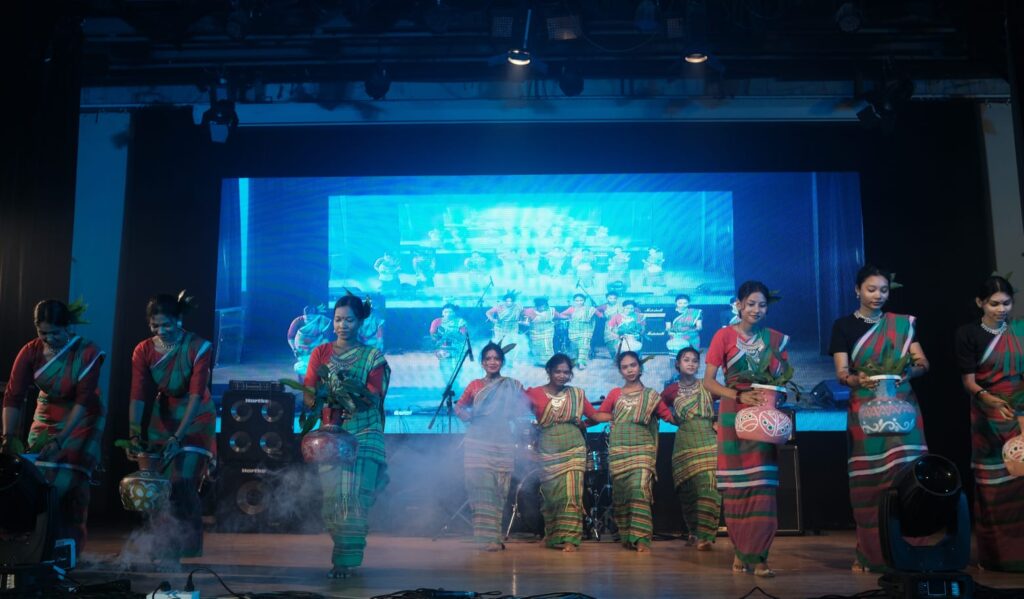
Following the discussion session, a vibrant cultural programme was organised as part of the day-long 6th National Conference of the Bangladesh Indigenous Peoples Forum. The cultural performances featured the musical group Madol, Dhaka University Jum Literature and Cultural Society(DUJLCS), and various Indigenous cultural groups.